
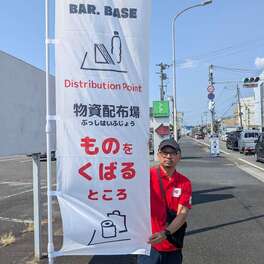
In the wake of the recent devastating Kumamoto Earthquake, the localized use of "Yasashii Nihongo" or "Easy Japanese" has played an instrumental role in relief efforts. This simplified version of the language has proven effective in aiding displaced individuals and foreign residents who may not be proficient in standard Japanese. The rapid and efficient exchange of information provided by Easy Japanese has helped to streamline both evacuation and recovery processes, emphasizing the importance of accessible communication during natural disasters.
Japan is a country often afflicted by natural disasters, making efficient and accessible communication a priority in crisis situations. Yasashii Nihongo or Easy Japanese, a simpler form of the language, caters this need, helping not only the Japanese citizens but also the increasing number of foreign residents. It embodies the cultural values of helping others and working as a community in difficult times. Additionally, it mirrors Japan's growing efforts to be more inclusive and accessible to foreign residents and visitors.
Similar to Japan, the US and EU also emphasize on the importance of clear and streamlined communication during crises. However, given the high number of different languages spoken across the EU and the diversity of the US, efforts often involve translation into multiple languages and the use of universally understood visual signals. The use of a simplified version of the native language, as seen in Japan, is not commonly practiced.