
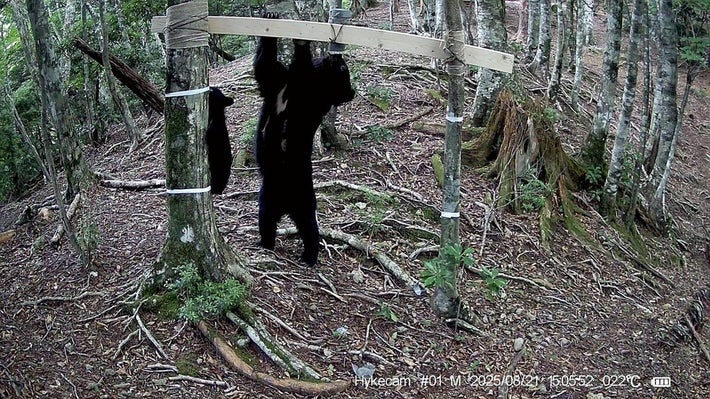
Japan's Shikoku Island has good news to share about its native Asiatic black bear, also known as the "Tsukinowaguma." Recent research and tracking confirm that the bear population on the island is not only surviving but actively breeding. Conservationists are overjoyed to observe this positive change in the bear population, which was endangered due to rapid habitat loss and human conflict.
In Japan, wildlife conservation, particularly of endemic species like the Tsukinowaguma, is met with great public interest. Increasing urban encroachment and rapid economic development in the past has led to concerns about the survival of several species. The successful conservation of the Shikoku bears demonstrates the efficacy of the measures being taken, and provides a rallying point for future conservation efforts.
Much like in the US and EU, wildlife conservation in Japan is a topic of great public and political importance. Similar efforts are seen in the US with conservation programs for species like the Grizzly bear and in the EU for the Brown bear. The main focus in all cases is to mitigate human-wildlife conflicts while ensuring habitat preservation and population recovery.