
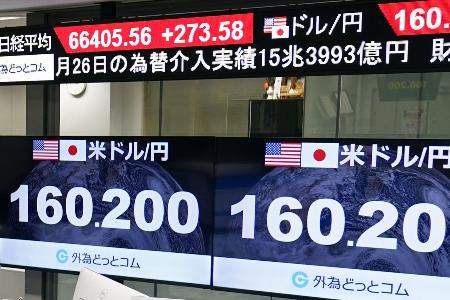
The Japanese yen has witnessed a decrease in value, with the effects of government intervention starting to fade after a period of four weeks. This entails the prior measures taken by Japan's authorities to counterbalance the Yen's appreciation, which seem to be losing ground. The weakening of the Yen may impact imports and exports, affecting the country's trade balance. Concerns are growing regarding the future state of Japan's economy amidst these currency fluctuations.
In Japan, the value of the Yen carries significant weight in determining the economic stability of the country. A strong Yen makes imports cheaper but damages the competitiveness of exports, affecting trade balance, and vice versa. Hence, any major fluctuations in the value of the yen draw considerable attention from businesses, policy-makers, and citizens likewise.
By comparison, in both the United States and European Union, the respective central banks monitor and occasionally intervene in the value of Dollar and Euro, similar to Japan. However, the strategy, timing, and effects of such interventions vary greatly due to different economic, fiscal policies, and market conditions in these places.