
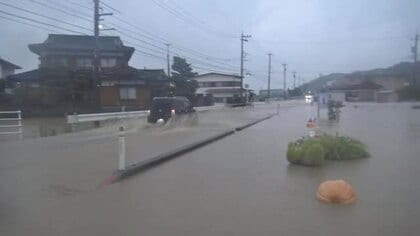
In Ishikawa, Japan, residents face the wrath of Mother Nature as rivers overflow, eerily making a number of communities feel isolated due to the flood. The emergency response groups and local authorities are working tirelessly to manage the situation and ensure safety for all residents. This sudden flood event came without a warning, showcasing the unpredictable dynamic of nature yet again.
Flooding incidents are quite common in Japan, especially during the rainy season. For Japanese people, being prepared for natural disasters is not only a precaution but a part of life. Japan's robust emergency response system and its ingrained culture of resilience are at the forefront in such situations. The country has well-established disaster management laws and highly technical early warning systems, thus reflecting strong social values of readiness and cooperation during catastrophes.
In the U.S. and E.U., flooding incidents are dealt with in a similar disaster-response manner. However, Japanese preparedness and resilience are consistently praised globally for their effectiveness. Though every region has its own standards and procedures, the U.S. and E.U. can learn from Japan's handling of such situations, especially regarding community preparedness, early warning systems, and swift response mechanisms.