
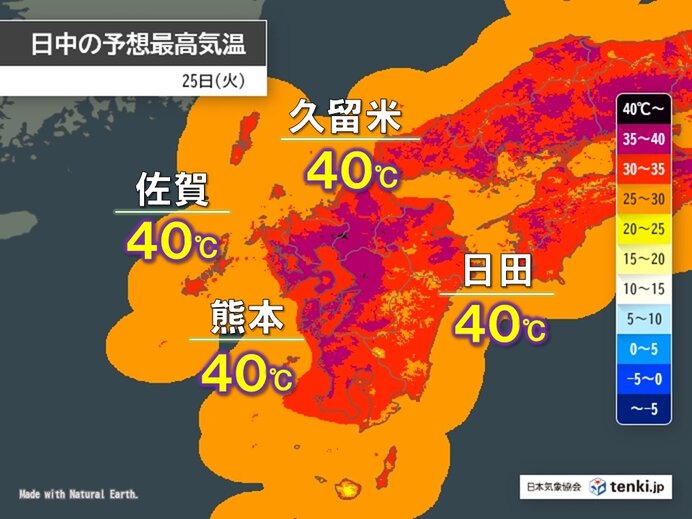
Residents of Kumamoto and surrounding regions in Japan are expected to brace for intense heat on the 25th, with temperatures potentially peaking at an alarming 40°C. This level of heat, which is categorized as a severe heatwave, is a major concern for vulnerable populations and much of the local activities. People are advised to stay hydrated and indoors whenever possible.
In Japan, severe climatic conditions such as heatwaves drastically impact daily life, ranging from public health to transportation and the economy. Japanese people, especially the elderly, as well as those with underlying health conditions, are at high risk. There is also a cultural significance as the weather influences seasonal events and festivals.
In the US or EU, heatwave conditions are generally received with similar concerns for public health. Precautionary measures include advisories to the public on staying indoors, traffic management for preventable emergencies, relief measures for the homeless, and other mitigation efforts. However, the frequency of such extreme weather events arguably paints a considerably more serious picture in Japan due to its unique geographical and societal makeup.