
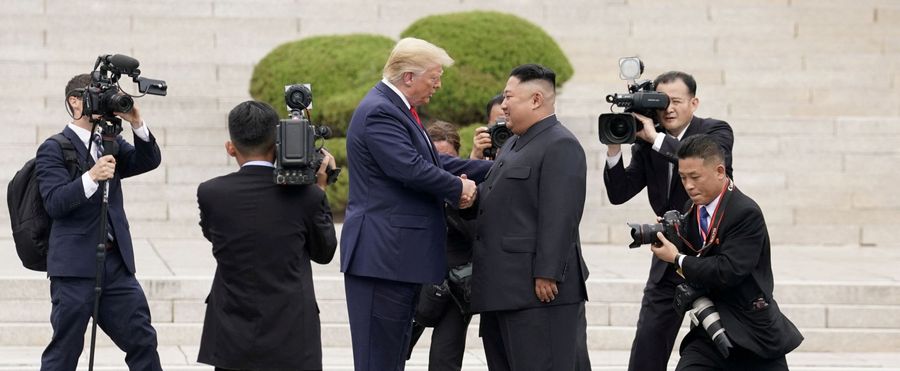
The article reports on the US President's recent expression of intention to hold a meeting with North Korea's leader Kim Jong-un. This move indicates an important shift in U.S. policy and signifies a proactive strategy toward the Korean Peninsula issues over perceived nuclear threats. The potential diplomatic talks are being closely watched by Japan, a key regional ally and potential participant in discussions concerning the denuclearization of North Korea.
Japan, being in close proximity to the Korean Peninsula, has a high stake in the stability of the region. There is a significant concern in Japan over North Korea's missile tests and nuclear program. Therefore, any moves towards de-escalation or resolution of these matters are heavily reported on and discussed within the country. Moreover, having been the only country victimized by nuclear bombs, Japan has a strong anti-nuclear sentiment and is extremely invested in non-proliferation efforts.
In the US, public conversation around talks with North Korea tends to focus on national security and international standing. There is also a high level of scrutiny on every diplomatic move due to the controversial nature of the relations with North Korea. In the EU, the focus is similar, though there is perhaps a greater emphasis on human rights issues in North Korea.