
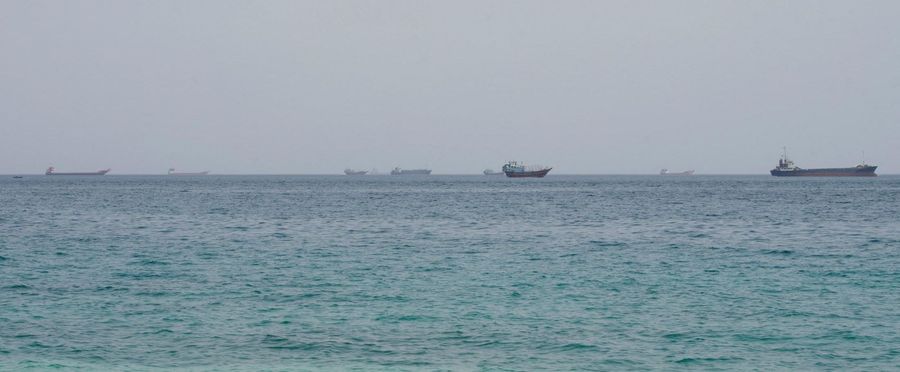
The expiry of the United States-Iran agreement leaves ongoing uncertainty around the reopening of the Strait of Hormuz, a key global maritime trade route. As tensions escalate, Japan finds itself in a precarious position, navigating the intricacies of its own relations with the U.S. and Iran, with special regard to its reliance on oil imports. The lack of a clear resolution is cause for concern both domestically in Japan and on an international scale.
This news is of considerable importance in Japan due to its heavy dependence on oil imports from the Middle East, particularly Iran. Any disruption in the Strait of Hormuz, therefore, directly impacts Japan's economy, making this an issue of high domestic relevance. Japanese society values peaceful international relations and prefers diplomatic solutions to such conflicts, thereby closely monitoring the situation.
In contrast, the U.S. and the EU have diverse energy sources and domestic reserves and are thus less directly impacted by Middle East trade routes. However, due to the importance of the Strait for global trade, any instability is a concern for nations worldwide. The diplomatic strategies of the U.S. and the EU often involve sanctions or negotiations, contrasting with Japan's more cautious diplomatic policy.