
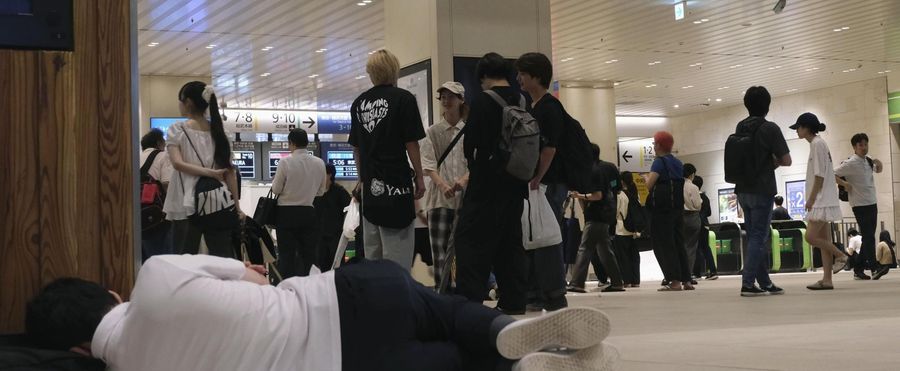
This news piece reports on families deciding to spend the night at the Chiba Station in Japan. This unusual event is, in many cases, due to unscheduled disruptions, irregular work schedules, or lack of transport options. Often involving parents and their children, these situations highlight the adaptability of Japanese families and the unexpected versatility of public spaces.
In Japan, train stations are more than just a transit hub - they involve shopping malls, restaurants, convenience stores, and even hotels, transforming them into public spaces where people not only commute but live out significant parts of their lives. Staying overnight at a station is not typically seen in a negative light, but rather as a testament to the safety, cleanliness, and convenience of Japanese public transport systems.
In contrast, in the US or EU, spending the night at a train station might be viewed differently - more as a sign of homelessness or a personal crisis. This reflects different cultural attitudes towards public space, safety, and personal circumstances.