
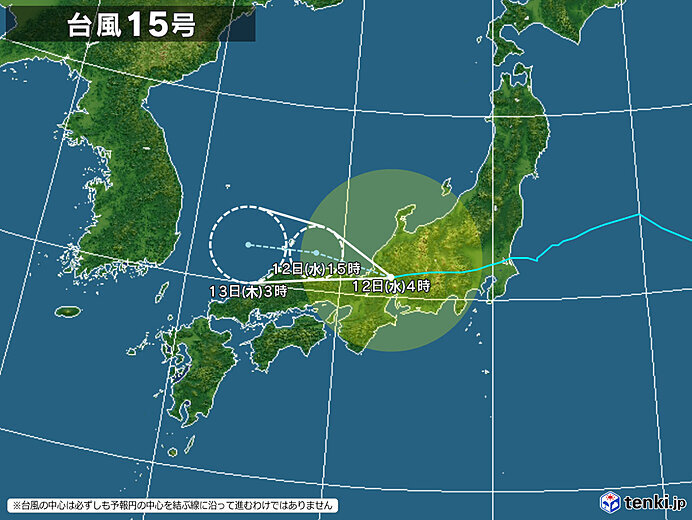
Typhoon No. 15, currently located in Japan's Kinki region, is gradually moving westward, sparking increased alert levels for the areas in its projected path. Residents of these areas are advised to take necessary precautions as the national meteorological office predicts heavy rainfall and strong winds. The exact impact of the storm is still unknown, but emergency services are standing by.
In Japan, typhoons are a common natural disaster, particularly during the warmer months of the year. Due to the frequency and potential severity of these events, the Japanese public usually pays close attention to weather updates. The government has mechanisms in place to ensure public safety such as issuing evacuation orders when needed. Residents are typically well-prepared for these events as awareness and preparedness for natural disasters are emphasized in school, home, and workplace education programs.
In the US or EU, similar weather-related disasters would be treated with comparable seriousness. However, the frequency of such catastrophes varies significantly between regions. In hurricane-prone areas like the Southeastern US, preparation and response are also ingrained in the local culture and procedures, akin to Japan. In contrast, some European regions may face less frequent or different types of natural disasters and thus might be less prepared for events like this.