
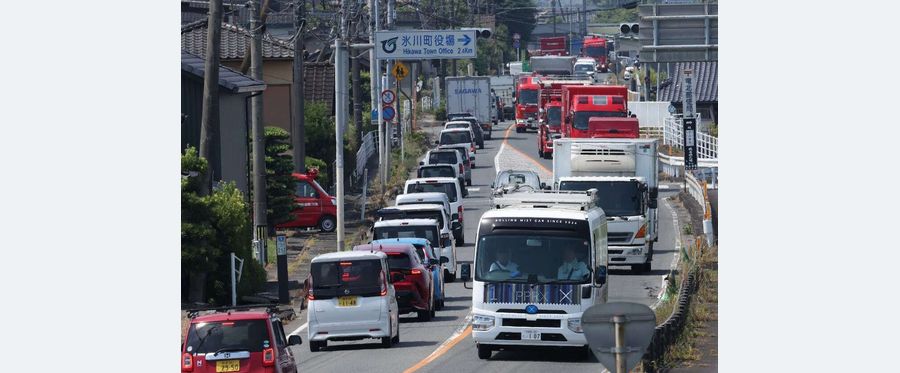
Japan is facing a significant roadblock in its efforts to recover from a recent earthquake—a major traffic jam. The titanic congestion, comprised primarily of recovery vehicles, is impediment to the restoration tasks, slowing down the process notably. Concerns mount as immediate relief to earthquake victims is delayed, and solutions to address this unexpected complication are currently being explored.
In Japan, the efficient handling of post-disaster recovery is of utmost importance. Society has a high expectation for swift and effective response during such incidents. The mass jam of recovery vehicles is seen as a deviation from this expectation, stirring concerns among the populace.
In contrast to how post-disaster recovery efforts are managed in the U.S. or EU, Japan's unique population density, alongside its expansive yet often constrained road networks, may contribute to such traffic issues during a crisis. Whereas the U.S. and EU may adopt a more decentralized approach, Japan's resource distribution heavily relies on concentrated, localized efforts, which might contribute to such congestion.