
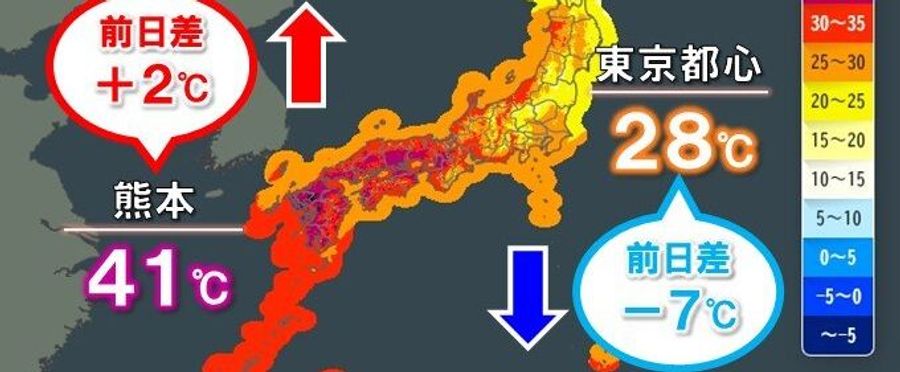
Certain areas in Kumamoto Prefecture, Japan, are expected to experience extreme heat exceeding 40℃ on the 3rd of the month, according to weather forecasts. Authorities urge residents to take caution against heatstroke and dehydration, by staying hydrated and avoiding outdoor activities during peak hours. High temperatures such as these pose not only health risks but also impose severe strain on agriculture and local ecosystems.
Extreme weather events, such as heatwaves, are taken very seriously in Japan. Given the country's aging population, the health hazards these high temperatures present, especially for elderly citizens, are of significant concern. Moreover, such weather phenomena often affect agriculture, a significant part of rural areas like Kumamoto, impacting local economies and livelihoods.
In the US and EU, extreme weather warnings are similarly issued with recommendations for residents to stay safe, much like in Japan. However, the social impact can vary. For instance, in the EU, the healthcare system can partially mitigate the risk of heat-related illnesses through public health initiatives. Although the US has initiatives in place, access may vary due to factors like health insurance coverage.