
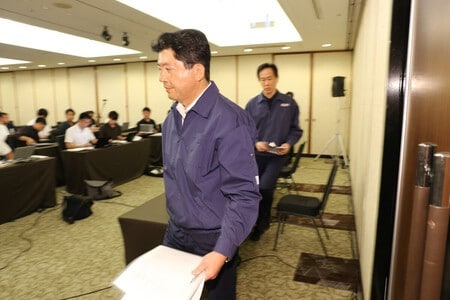
The president of Aeon Co., Japan's largest retail group, has publicly admitted to underestimating potential catastrophic situations. A recent statement reveals that the company's crisis management plans did not sufficiently account for 'explosive' scenarios, perhaps referring to sudden major disasters or significant economic shifts. The executive's remarks have elicited varied reactions in Japan, highlighting the importance of effective emergency preparedness in business operations.
In Japan, disaster preparedness is considered extremely important due to the history of natural disasters such as earthquakes and typhoons. For a major corporation like Aeon to admit a potential weakness in their crisis management strategy is significant and can impact public opinion on their management competency. Corporate leaders are held to high expectations in Japan, and this admission may incite shareholders to demand further accountability and reassurances of business continuity planning.
In the US or EU, companies are also expected to have effective crisis management measures in place. However, public admission of gaps in these plans by company leadership is less common, as it may lead to a loss in shareholders' confidence and a potential fall in stock prices. In this sense, the Aeon CEO’s candidness might be seen as an example of strong corporate leadership or as a damaging admission, dependent on cultural perspective.