
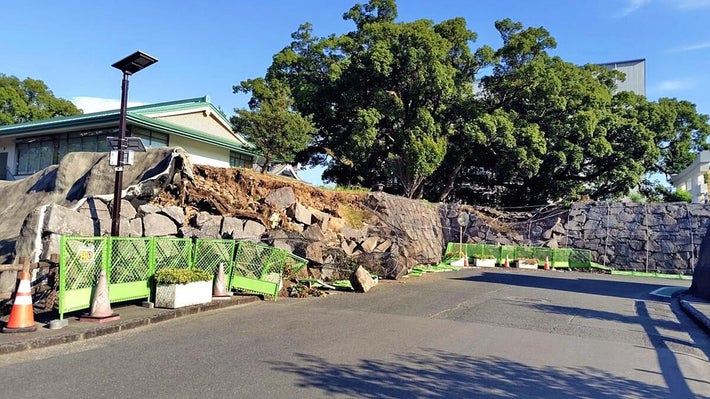
Multiple sections of the stone walls at the historic Kumamoto Castle in Japan have collapsed recently. While no injuries were reported, the damage is a significant cultural loss – the castle, a symbol of the region, dates back to the 15th century. Investigations into the precise cause of the collapses are ongoing, but experts point to the wear and tear of age, compounded potentially by past seismic activities.
In Japan, historic landmarks like the Kumamoto Castle carry immense cultural value and pride. They serve not only as tourist attractions but also as symbols of local identity. Any damage to these heritage sites triggers a national concern over preservation. This incident might lead to discussions about better protective measures for such structures, taking into account aging infrastructure and the country's seismic activity.
In the US or EU, damage to historical structures may also serve as a wake-up call for preservation efforts. However, measures may differ owing to regional concerns. For instance, in Europe, efforts might be focused on preserving structures from wear due to weather conditions, whereas in the US, certain areas may need to focus on withstanding hurricane or fire damage. The emphasis on cultural preservation remains nonetheless strong across the globe.