
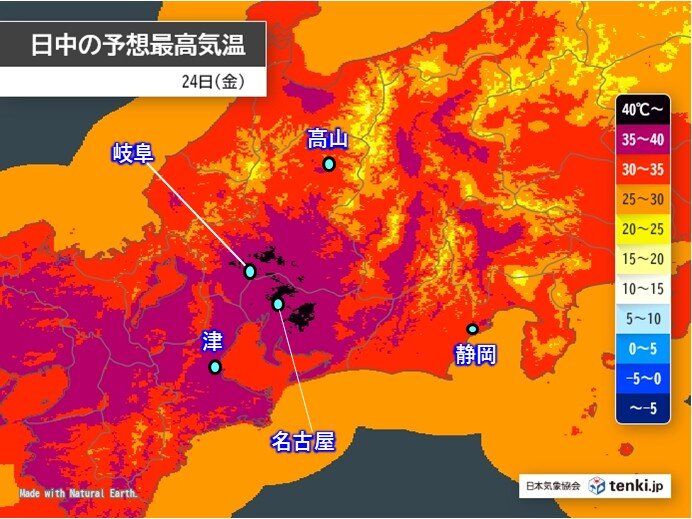
Japan is anticipating a potentially record-breaking heatwave, with temperatures expected to hit 40 degrees Celsius for five consecutive days. This forecast, indicating extreme weather, is being closely monitored by the Japanese Meteorological Agency. If the predictions come to pass, this will be the country's first such occurrence in recorded history. Authorities are urging citizens to take appropriate measures to deal with the scorching heat and maintain their health, particularly senior citizens and those having underlying health conditions.
Extreme weather conditions in Japan, particularly in summer, often result in heatstroke cases and are a major public health concern. The anticipation of this unprecedented heatwave has the nation on edge. Schools, offices, and public spaces are expected to ramp up protection measures, especially as the COVID-19 pandemic continues. To survive the sweltering climate, people typically use air conditioners, eat cooling foods, and refrain from going outside during peak heat hours.
In contrast, the US and EU also experience heatwaves, but different geographic and social conditions result in distinct responses. While air conditioning is widely used in the US, the EU normally relies more on lifestyle adaptations, creating cooler public spaces, and heat health warning systems. However, an increase in extreme weather events due to climate change is a shared reality for all regions.