
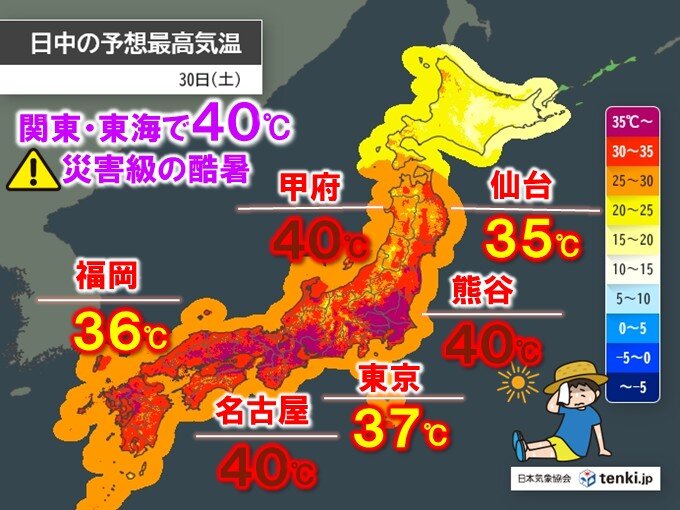
Japan is on high alert as weather forecasts indicate a fierce heatwave set to begin from the 21st, with the city of Nagoya potentially reaching a staggering 40°C. Alarmed by this scenario, the authorities are referring to this as a "disaster-level heat" and are urgently preparing to minimize effects on public health and infrastructure. The local population is being advised on safety practices during this extraordinary period of heat.
Heatwaves in Japan can often be fatal due to the high humidity in addition to the heat, causing severe heat illnesses. The government and citizens take these extremes seriously, often treating them as disaster scenarios. As part of the response, public spaces are made available for citizens to cool down, while ambulances and hospitals are on alert for heatstroke cases.
In the US or EU, extreme heatwaves may result in similar responses with local authorities providing cooling centres, advice on staying cool, and increased hospital readiness. However, building designs and air conditioning use vary greatly between Japan, the US, and the EU, affecting the way people cope with such conditions.