
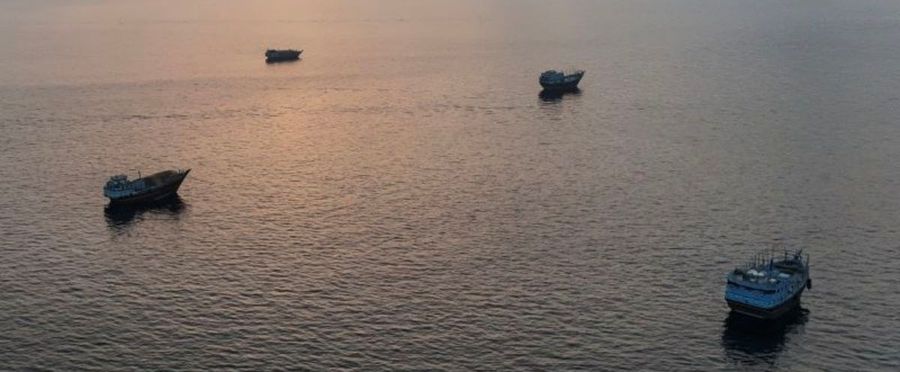
Iran has announced the closure of the globally strategic Strait of Hormuz, a major artery in the worldwide oil trade. This move, announced at an unspecified time, has the potential to escalate tensions on the global stage. The Strait of Hormuz serves as a major transit route for vast amounts of the world's oil supply, thus its closure hints towards economic ripple effects. The reasons behind Iran's abrupt decision remain undisclosed.
Japan relies heavily on oil imports for its energy needs, with the Middle East being a key supplier. The closure of the Strait of Hormuz could disrupt Japan's supply chains and cause energy prices to spike. The news is taken very seriously in Japan and is a point of considerable debate among political and industry circles. Japan's principals of maintaining peace and promoting friendly international relations are also an area of concern.
In the US or EU, the closure of the Strait of Hormuz would similarly prompt discussions on energy security and foreign policy. However, the impact might differ as both the US and EU have more diversified sources of energy and are less dependent on Middle Eastern oil compared to Japan. The situation would likely instigate political discourse on the country's diplomatic stance towards Iran and its strategy for securing its energy.