
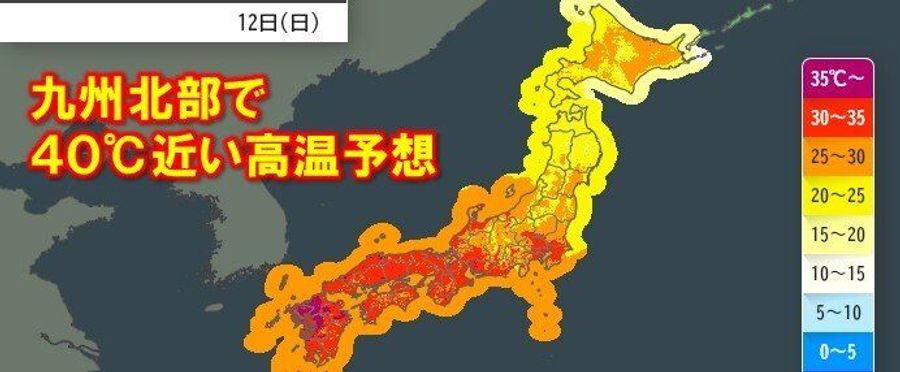
Japan's southernmost main island, Kyushu, is bracing for a spell of dangerous heat, with temperatures forecasted to surge close to 40℃. Residents and visitors are advised to take necessary precautions to avoid heatstroke. The extreme temperatures are expected to hit over the next few days. Local authorities and health organizations are encouraging individuals to stay hydrated and avoid prolonged exposure outdoors.
Heatwaves in Japan have become a major concern in recent years, with instances of heatstroke becoming increasingly common. For the Japanese, reactions towards this news often revolve around issues of health, safety, and climate change. Public awareness campaigns are usually carried out in warning people about the dangers of heatstroke and how to avoid it. The issue also touches on the country's aging population, who are more susceptible to the risks associated with extreme heat.
In the US or EU, severe weather warnings similar to this also prompt public health advisories. However, response strategies may differ due to infrastructural differences and age demographics. In hotter states of the US, like Arizona or Texas, residents are more acclimated to high temperatures, and buildings are often equipped with efficient cooling systems. In contrast, air conditioning in Japan, and particularly in European countries, is less common.