
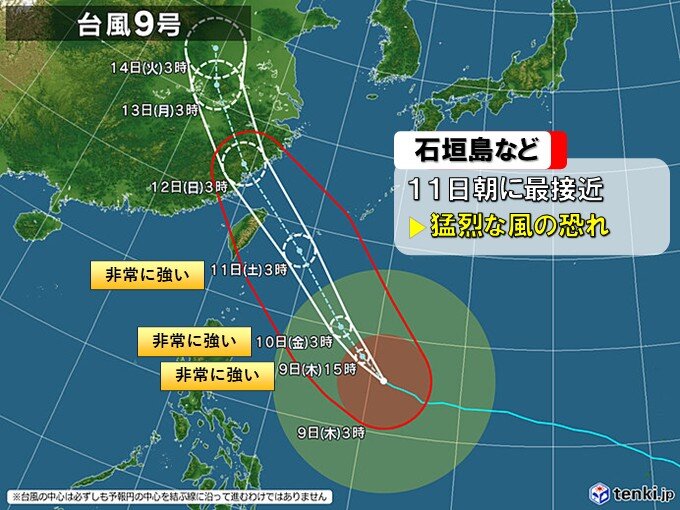
Typhoon No. 9 is reportedly on course to directly strike Japan's Ishigaki Island and surrounding areas on the morning of the 11th. The Japan Meteorological Agency has been keeping a close eye on the typhoon's progress, issuing severe weather warnings. Residents in potential affected areas are advised to be prepared for heavy rain, high winds, and severe sea conditions.
In Japan, typhoons are a common occurrence, especially during the summer months, causing people to always be alert about weather updates on TV and social media. Safety measures are prioritized, and public services, schools, and businesses often close in areas of severe weather impact. Japan's advanced disaster response systems, from timely warnings to efficient evacuation procedures, reflect the society’s overall emphasis on public safety and preparedness.
In comparison, the handling of similar severe weather occurrences in the U.S. or EU varies on the type of weather disaster and location. Hurricanes in the US, for example, inspire similar preventative measures, with meteorological tracking, public warnings, and evacuations. However, the extent of preparedness infrastructure and response systems varies by state, unlike Japan’s more standardized system.