
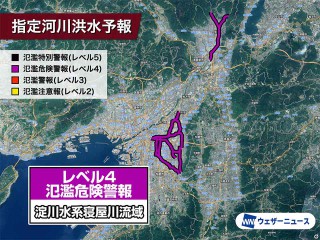
Japan's Meteorological Agency has issued a level 4 flood warning for the Neyagawa river basin, indicating a high risk of flooding due to heavy rainfall. Residents in the area are being urged to take immediate measures to protect lives and properties, as the volume of water is exceedingly dangerous. The warning is active until further notice, with local authorities working extensively to monitor the situation and assist in evacuations if necessary.
In Japan, flood warnings like these are taken extremely seriously -- not only for safeguarding properties but also for prioritizing lives. The focus is on quick and efficient evacuation processes, with local communities and groups actively taking part. Given the frequency of typhoons and heavy rains, such potential disasters are part of Japan's societal and legal structure, leading to well-prepared and detailed evacuation plans.
In the US or EU, similar issues are also met with serious concern, with local authorities issuing mandatory evacuation orders when flooding risk levels are categorized as life-threatening. There is usually a shared responsibility among forecasters, disaster management authorities, and the public, where everyone must play their role in ensuring safety. However, compared to Japan, their flood warning systems might be less frequent or systematic due to varying geographies and climates.