
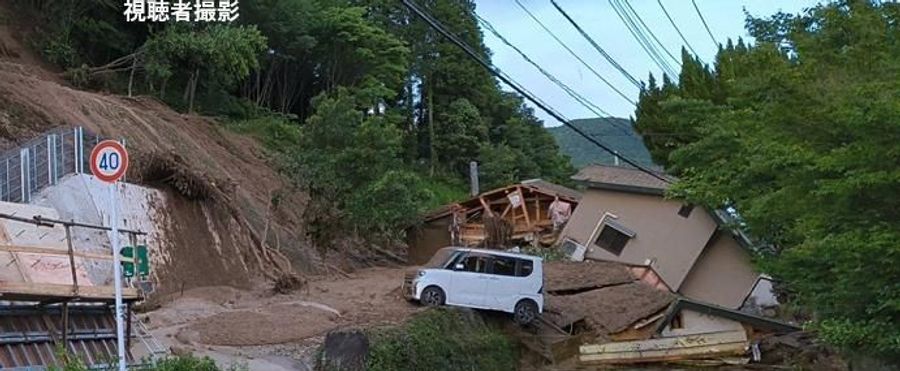
A significant landslide in Oita Prefecture, Japan, has resulted in a resident becoming half buried in mud and debris. Despite the unfortunate series of events, the community, with the coordination of the local government, has rallied together to initiate immediate rescue and aid efforts. This act of unity has brought a semblance of hope in an otherwise grim situation. The nature and severity of the resident's condition is yet to be revealed.
Resilience in the face of natural disasters is ingrained in Japanese culture. The country frequently experiences earthquakes, tsunamis, and landslides, owing to its geographical location. Therefore, disaster prevention and response are paramount, with local communities often rallying together for rescue efforts. Direct communication and clarity from the government and media about unfolding situations are highly valued.
In contrast, the U.S. and EU, although no stranger to natural disasters, have a more centralized disaster response system. The efficiency of the response often varies depending on the location and type of disaster. While community response can also be seen, it isn't usually the first line of action in contrast with the tightly-knit Japanese communities.