
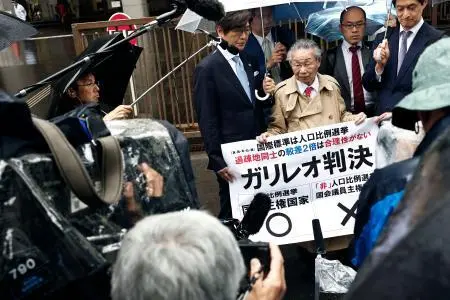
The Supreme Court of Japan upheld a decision tolerating the 1-vote disparity in the House of Representatives election, marking it as the 15th similar constitutional verdict. Despite numerous protests, the court maintained that the variance reflects the balancing act between rural and urban areas. While differences in voting value prevail, the court insists they fall within constitutionally accepted limits. The decision is attracting fierce criticism, sparking debates over true democratic representation.
Japanese citizens have increasingly been concerned about electoral disparities. The 'one vote, one value' principle is valued in Japan, and citizens feel marginalized when their votes possess lesser weight, especially the urban population. This issue repeatedly surfaces during elections, raising questions about the fairness and validity of Japanese democracy.
American and EU countries grapple with similar challenges, primarily aiming for fair representation of their diverse demographics. The contentious US Electoral College System, for example, also features vote value disparity. Meanwhile, the EU has proportional representation systems to balance votes, but rural-urban disparities are still evident.