
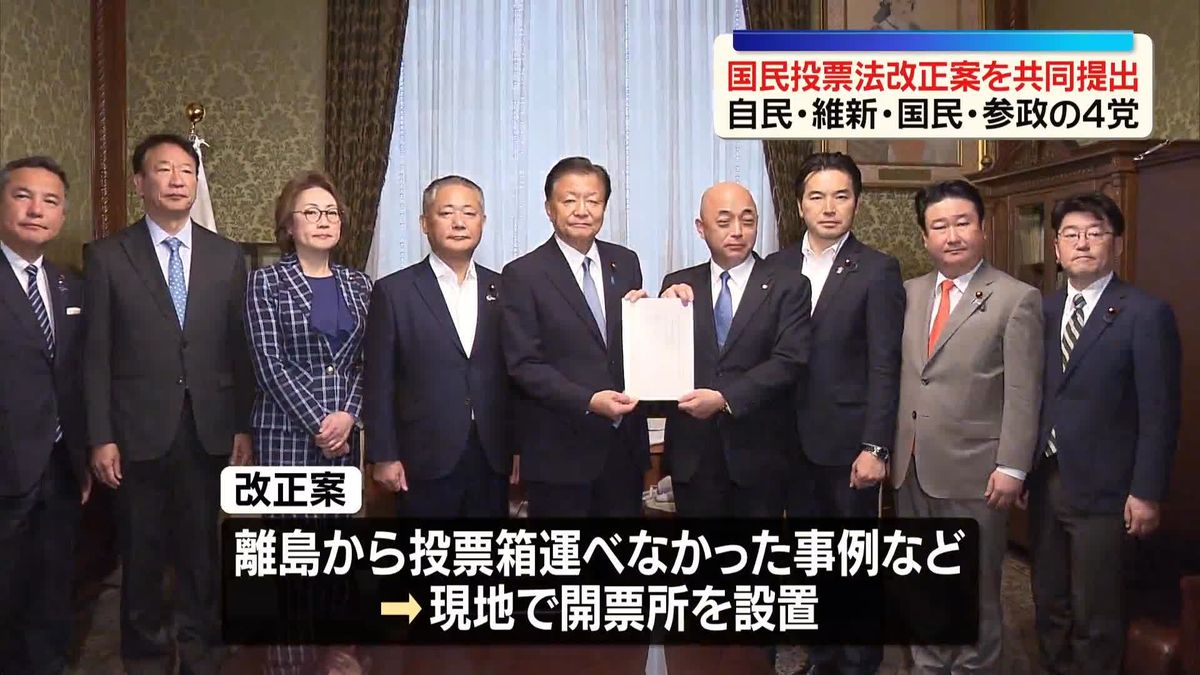
Four major political parties in Japan have collectively submitted a bill to reform the country's National Referendum Law. The proposed revision is seen as a vital step towards fostering direct democracy in the country that is typically dominated by its representative parliamentary government. The exact changes they propose remain to be clarified, but the collaboration of the four parties signifies the importance of this legislative bid.
In Japan, any amendment to the constitution requires a national referendum under the National Referendum Law. However, concerns have been raised about the transparency and fairness of this process. The proposed reform by the four parties is seen as a significant move to address these concerns and usher in a more informed and democratic process. The Japanese public typically holds a high interest in such reforms due to the direct impact it can have on their socio-political lives.
In the United States and the European Union, there is a strong history of direct democracy through referendums. However, unlike the USA, where referendums often take place on local and state levels, the EU, like Japan, uses them mostly for significant national or constitutional issues. Therefore the reform of referendum laws attracts international attention, as it showcases the ongoing struggle to balance direct democracy with representative governance.