
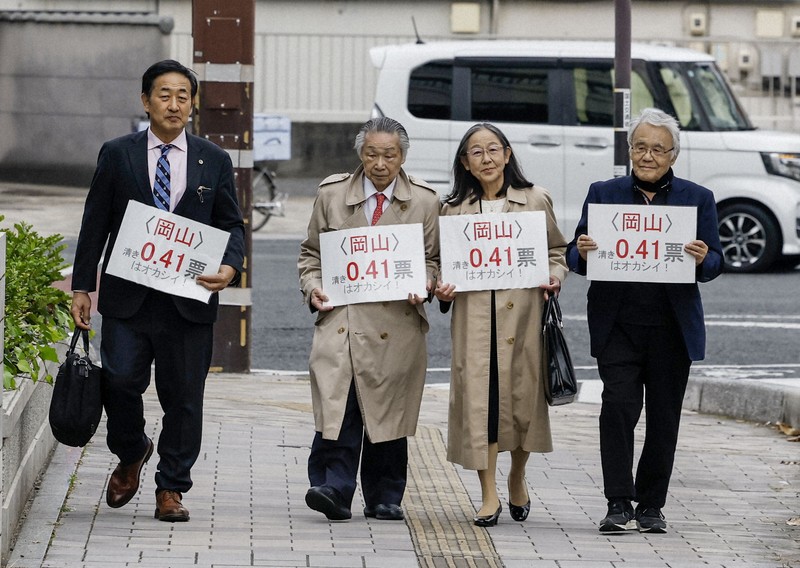
The Hiroshima High Court dismissed two lawsuits objecting to election results due to a vote disparity issue. The complainants claimed that this disparity undermined the value of individual votes. However, the court judged the election to be constitutional, emphasizing the relevancy of current legal parameters and the regular reevaluation necessary to suit the changing population distribution.
In Japan, concerns over vote disparities are taken very seriously due to the constitutional principle of one person, one vote. The Japanese public places high value on fairness and equality in electoral processes, resulting in these court cases reaching the highest levels of scrutiny and visibility. The Hiroshima High Court's decision has thus sparked significant democratic discussions.
Challenges to voting disparities also arise in the US and EU, usually manifesting in gerrymandering cases or debates over the electoral college and proportional representation respectively. Like Japan, these issues reach high courts and draw public interest, reflecting universal democratic values.