
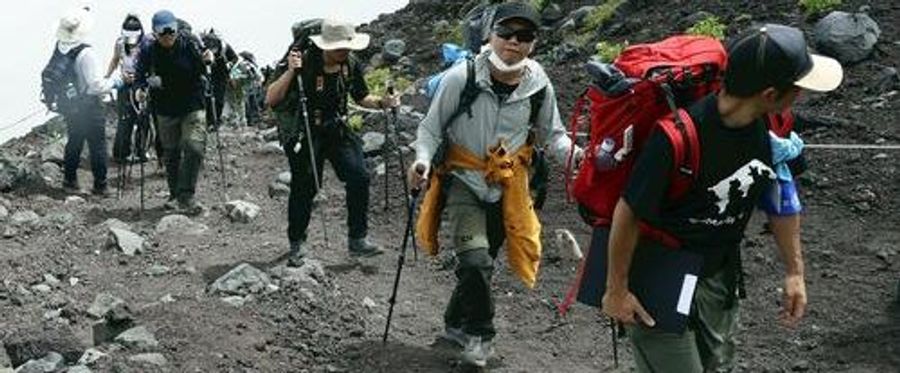
Japanese authorities have reported a marked decrease in 'bullet climbing' on Mount Fuji, an activity wherein climbers aim to ascend and descend the mountain within a compressed time frame. The trend towards 'Fuji distancing' i.e., choosing other outdoor activities or staying away from the mountain, has been escalating over recent years. The report did not specify a reason, but it's hypothesized that this is due to an increased awareness of environmental conservation efforts and shifting climbing behaviors amongst the regular visitors and climbers of Japan's highest peak.
Mount Fuji is not just a popular tourist destination, but a cultural symbol in Japan. The bullet climbing trend has been a concern due to its potential impact on climbers' safety and the mountain's delicate ecosystem. The decrease could be seen as a sign of increased environmental consciousness in Japanese society. It may also reflect changing leisure interests among the people of Japan.
In contrast to Japan, the US and the EU have significant restrictions and conservation measures in place for their natural landmarks, with regulations such as limiting visitor numbers or requiring permits for certain activities. The decline in bullet climbing in Japan can be compared to similar shifts in western countries, as more people become aware of the need for sustainable tourism and recreation.