
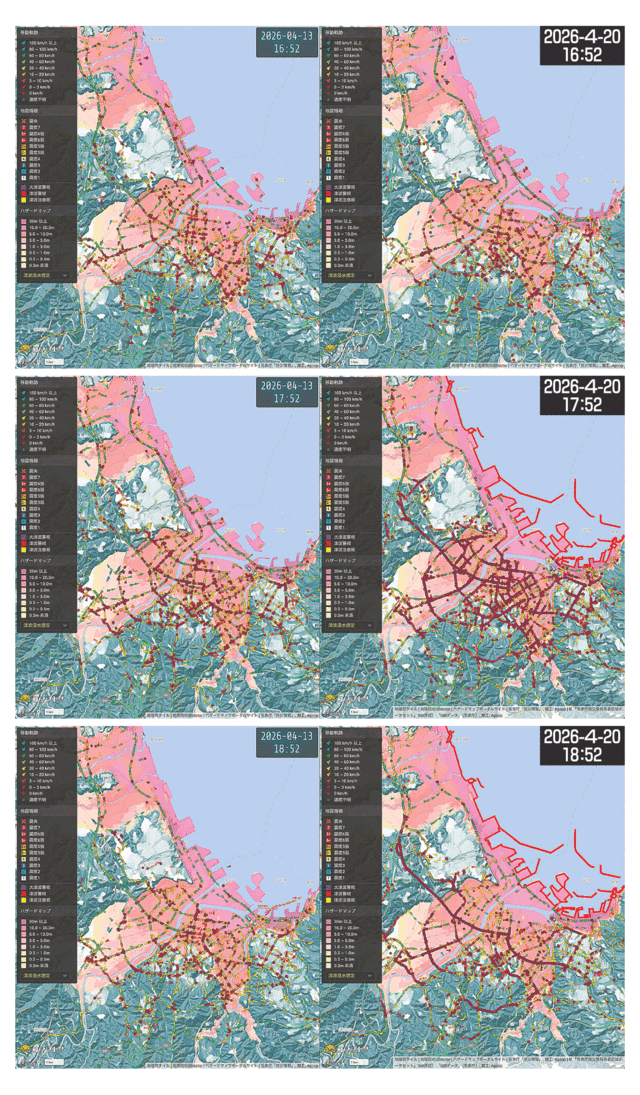
On the 20th, a major seismic event took Japan by storm, leading to a tsunami warning across various regions. As citizens swiftly responded to evacuation orders, a notable consequence surfaced in the form of severe traffic congestion. The emergency response services, while bolstering their efforts in mitigating harm, faced new challenges brought by the unexpected travel delays.
Japan, being situated in the Pacific Ring of Fire, harbours well-familiarity with earthquakes and their subsequent tsunami threats. Safety measures are significantly valued, incorporating early warning systems, efficient evacuation plans, and sturdy infrastructure. However, this event stirred a conversation around large-scale evacuation logistics, essentially highlighting the critical need for smooth traffic flow during such crises.
Unlike Japan, the US and EU aren't as frequently hit by earthquakes and subsequent tsunamis, although they do have areas vulnerable to such disasters. Both these regions, however, share similar challenges during evacuations, including managing urban congestion and ensuring effective, timely communication to the public.