
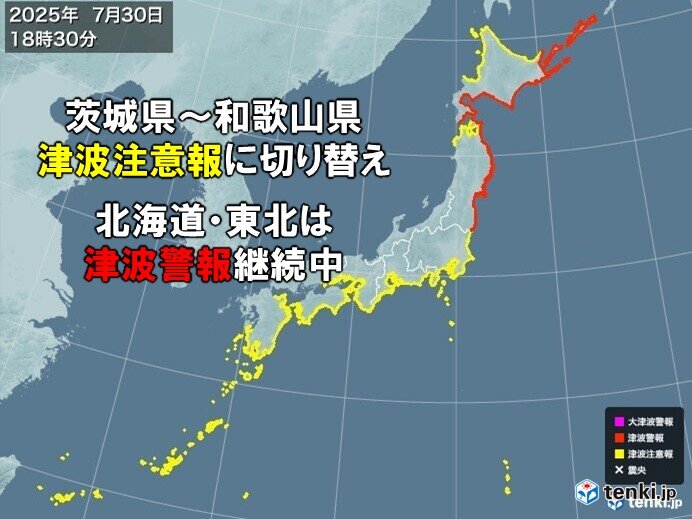
Japanese authorities have downgraded a tsunami warning to a tsunami watch, indicating less imminent danger than previously reported. This comes after deterring geological activities were monitored under the sea. The switch was made to assure the public that the threat of significant danger has reduced, although slight seawater fluctuations may still be expected. The specifics of which areas are under the watch and the subsequent course of action by the local government remain forthcoming.
In Japan, tsunami warnings and watches are not taken lightly because of the country's history with destructive tsunamis, most notably the 2011 Tohoku earthquake and tsunami. There is a well-established warning system in place and the population is well-educated about the appropriate response measures. Therefore, news like this – which signals a decrease in threat level – is treated with a high degree of relief and importance.
In the US or EU, the response to tsunamis varies based on the region's exposure to such disasters. Coastal states in the US, like California, Hawaii, and Alaska, have elaborate tsunami warning systems like Japan. Similarly, the European Union has coordinated efforts across member states to put comprehensive disaster response frameworks in place for similar events. Even though the frequency and intensity of tsunamis are less than in Japan, they also treat these warnings seriously to ensure public safety.