
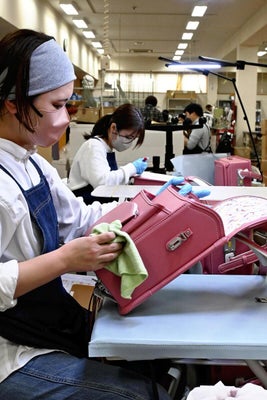
The Adachi district in Tokyo has witnessed a significant cluster of 'Randoseru' (schoolbag) production, stirring intrigue among observers. Randoseru, a type of firm-sided backpack used by elementary school children in Japan, have traditionally been produced in Adachi, contributing significantly to the local economy. The reasons for this geographic concentration are both historical and logistical, with a lineage of skilled workers, proximity to necessary resources, and advantageous trading routes contributing to the district's niche production.
The Randoseru is deeply ingrained in Japanese school culture, universally known and used across the country. Its quality and durability are highly valued, indicative of the broader societal emphasis on quality and longevity in goods. The production concentration in Adachi, therefore, is a peculiarity of interest to both local residents and the wider Japanese public.
This could be compared to the concentration of tech companies in Silicon Valley in the United States. The geographic clustering of industries is a common phenomenon worldwide, driven by various factors, such as availability of skilled labor, proximity to markets, and historical development patterns.