
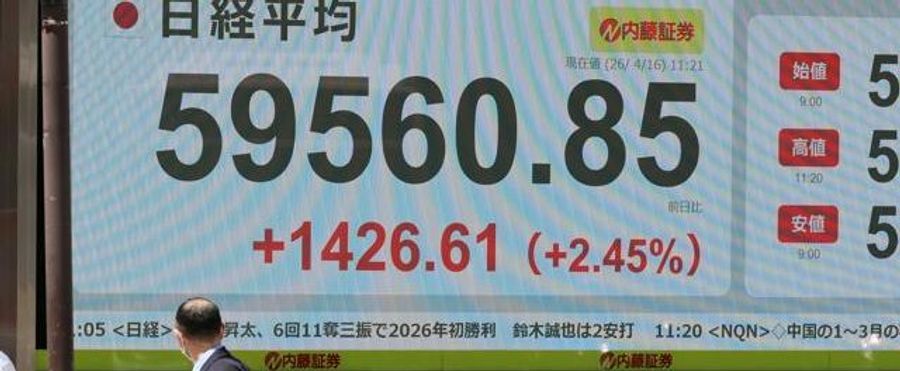
Japan's premier stock index, the Nikkei, momentarily touched the elusive 59,600 Yen level, setting a new record. This is a significant achievement for the Japanese financial market, highlighting strong company performances and investor confidence. Though fluctuating, the progression of the Nikkei Index is eagerly watched by many national and international investors and analysts.
The Nikkei Average is a crucial barometer of Japan's economic health, and is keenly followed by individuals, businesses, analysts, and policymakers. A robust stock market performance is often seen as a testament to the country's robust economic environment, and therefore, such highpoints are regarded as encouraging indicators for Japan's economic outlook. In this context, ambition, resilience, and investment strategy of the Japanese financial sector are much admired.
In the context of US or EU, similar achievements are regarded with equal importance. Financial markets, such as the Dow Jones Industrial Average in the U.S. or the Euro Stoxx 50 in Europe, are crucial indicators of economic health. Peaks in these indices elucidate strong company performances and positive investor sentiments. Akin to Japan, they serve as optimistic signals for national and global investors.