
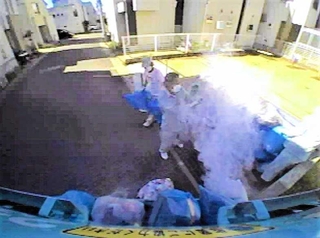
Japanese households are being warned about the potential harm of microbeads, small, round pieces of plastic, that can spread easily when disposing of household garbage. A recent increase in the prevalence of these particles in local environments has alarmed authorities, prompting them to raise awareness and appeal for caution amongst citizens. The particles pose a significant environmental hazard, threatening both terrestrial and marine environments upon entering water bodies.
Japan's environmental policy prioritizes waste segregation and recycling. Issues such as microbead dissemination in waste are seen as significant due to the potential ecological impact. Japan’s concern about microbeads is mainly due to their non-biodegradable nature and potential to harm aquatic life when they enter the ocean, contaminating the food chain and affecting human health.
The issue of microbeads is similarly significant in the US and EU. Both regions have enforced a ban on the production and sale of rinse-off personal care products containing plastic microbeads. This reflects a commitment to reducing plastic pollution. However, the spread of these particles in household waste is less commonly discussed and remains a secondary concern.