
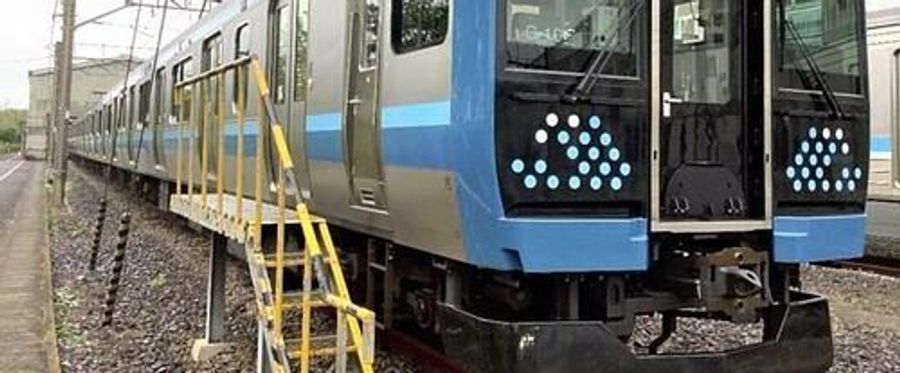
JR East, one of Japan's major railway companies, is planning to introduce Artificial Intelligence (AI) to detect people on station platforms. This pioneering move aims to enhance safety measures and prevent accidents like passenger falls onto the rail tracks. While the timeline for AI implementation is yet to be revealed, JR East expects it to significantly bolster the existing safety mechanisms that currently rely mostly on station staff and CCTVs.
Safety at railway stations is a matter of utmost concern in Japan due to its highly crowded cities and extensive reliance on public transportation. Incidents of passengers accidentally falling onto the tracks have resulted in severe injuries and fatalities in the past. JR East’s decision to harness AI technology for surveillance is in line with Japan's commitment to technological innovation for creating safer public spaces.
In the US or EU, safety measures at train stations often involve physical barriers, such as platform edge doors, along with video surveillance. AI-based surveillance is not yet a widely adopted practice, which highlights Japan's forward-thinking and pioneering approach towards leveraging technology for public safety.