
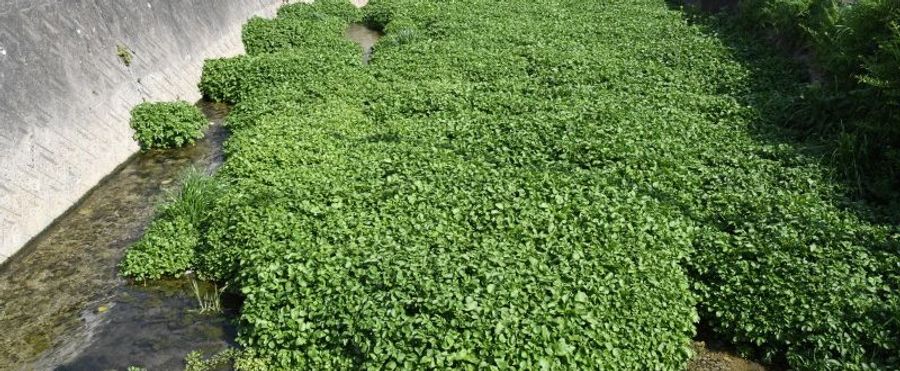
A river in Japan has suddenly become the unintentional cultivation ground for an unexpectedly large amount of watercress. Residents have expressed a mix of bewilderment and concern over the unanticipated proliferation of the aquatic plants. The exact cause of this drastic growth is unknown. While the emerald green spectacle has its aesthetic appeal, residents worry about potential environmental effects and demand a comprehensive study to identify its implications.
In Japan, where respect for nature and balance of the environment form integral aspects of society's values, this news would elicit concerns over the environmental imbalance it suggests. While watercress is a commonly used ingredient in the Japanese cuisine, such an uncontrolled and widespread growth is unnatural. Many might speculate if this is an indication of ecological imbalance, and discussions related to environmental preservation would likely ensue.
Compare to the US and EU, where news of such plant overgrowth in water bodies would generally be seen as a potential threat to local ecosystems. It might prompt local authorities and environmental groups to conduct investigations, assessing the impact on local flora and fauna and proposing appropriate interventions.