
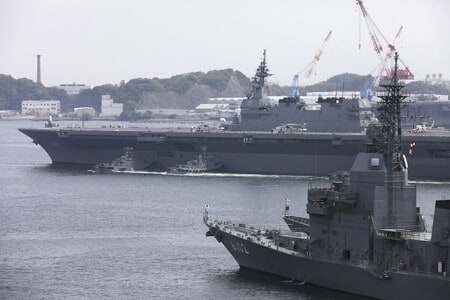
This news revolves around the 10-year anniversary of Japan's revised security laws and the consequential expanded operations of its Self-Defense Forces (SDF). The SDF, originally confined mostly within Japan's territory, now plays a significantly larger global role, participating in various overseas missions. This shift, controversial at the time of its inception, has redefined Japan's pacifist defense policy, paving the way for an increased security presence in the rapidly changing geopolitical landscape of Asia.
Japan's post-WWII constitution has asserted the nation's commitment to pacifism, historically limiting the actions of the SDF. The decision 10 years ago to revise security laws and expand the role of SDF was met with mixed reactions. Supporters saw this as a necessary step to protect national security amidst escalating tensions in the Asia-Pacific region, while critics expressed fears it could entangle Japan in overseas military conflicts, undermining the country's pacifist stance.
In stark contrast to the U.S. and EU, where armed forces regularly conduct international operations, Japan's constitutional commitment to pacifism has traditionally kept its SDF within a defensive and largely domestic role. The expanded responsibilities given to the SDF 10 years ago bring Japan closer to the international expectations of a military superpower, though it still tends to be more reserved in its use of force compared to the US or EU.