
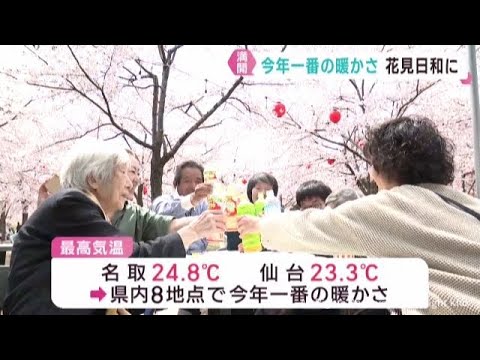
Japan embraces the first wave of spring warmth, leading to the highly anticipated nationwide cherry blossom viewing or 'Hanami.' The day, celebrated as the year's warmest, ignites Sakura blooming across various regions, attracting locals and tourists alike for traditional outdoor festivities amid the backdrop of pastel skies. This natural spectacle, marking the ushering of spring, plays a significant and cherished role in Japanese culture.
Hanami is a long-standing Japanese tradition where people gather under blooming Sakura (cherry blossoms) to enjoy the transient beauty of flowers, reflect on life, and socialize. It signifies the arrival of spring and is considered an auspicious time. The warmth of the first hot day of the year makes this event even more special and joyful. The event holds a sentimental and cultural significance for the Japanese, symbolizing the fleeting nature of life.
In comparison, the US celebrates the National Cherry Blossom Festival, largely influenced by Japan's Hanami. However, unlike Japan where cherry blossoms herald the onset of spring and are deeply associated with cultural beliefs, in the US, it's more focused around commemorating the gift of Japanese cherry trees from Tokyo City to Washington D.C. In the EU, cherry blossom viewing is not traditionally significant but has gained popularity recently within the context of cultural exchange and tourism.