
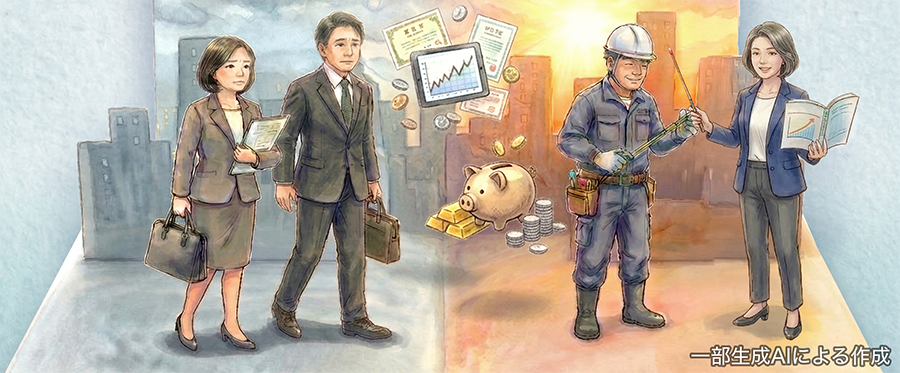
Recent reports spotlight the increasingly difficult livelihood of Japan's 'Ice Age Generation' - individuals who came of age during Japan's financial stagnation period around the 1990s-2000s. The age group, facing long-standing difficulties in job security and financial stability, are feeling heightened anxiety in today's challenging economic times. From low-wage employment to unstable contract jobs, their struggle underscores the shifting landscape and fragility of the Japanese job market.
In Japan, the 'Ice Age Generation' issue has become a central point of discussion about the nation's long-term economic outlook and social security policies. Economic stability and job security are deeply embedded in Japanese societal values, with many attributing a sense of personal identity to their professional careers. The challenging circumstances faced by the 'Ice Age' individuals are increasingly seen as a barometer of wider socio-economic concerns.
Contrastingly, in the US and EU, there is a greater emphasis on social mobility and the concept of the 'American Dream' or 'European Dream'. Though economic conditions fluctuate, older generations are generally less stuck in lower-paying jobs. In addition, social security programs are more robust, providing a stronger safety net for those faced with economic difficulties.