
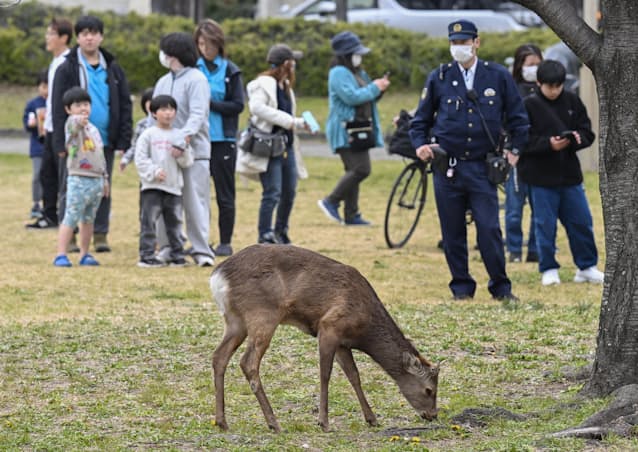
A surprising influx of deer has been noticed recently in the city of Osaka, a scenario not typical for the urban landscape. Despite the deer's usual home being in neighboring Nara, the authorities in Nara have firmly declined to accommodate these unexpected guests. The reasons for this migration and the ensuing implications are yet to be fully understood, necessitating intensive studies and potentially novel wildlife management strategies.
This issue has attracted attention as Japanese culture reverence wildlife and consider deer sacred in places like Nara. The migration of deer to unusual areas like Osaka poses questions about how urban planning and wildlife conservation efforts are intersecting and paints a broader picture of human-wildlife conflicts in Japan.
In comparison, U.S. or EU cities also face issues with urban wildlife but the species may vary, such as raccoons or foxes. Local authorities often try to relocate these animals to natural habitats when possible. However, a refusal to do so, like in Nara's case, would be seen as unusual and would spark public interest and possibly debates about animal welfare and management.