
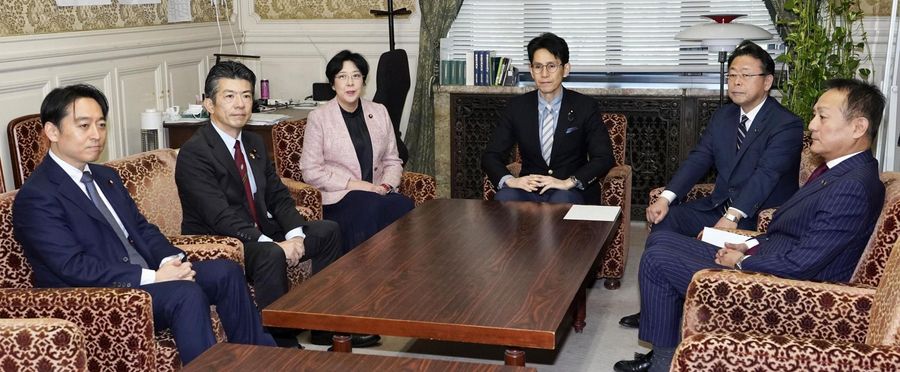
Three parties, recognized for their neutral stance in Japan's political landscape, have come to a consensus to participate in the 'National Assembly.' The decision marks a significant step towards achieving a more balanced representation in Japanese government. The parties involved did not disclose specific details of their joint objectives. However, their collaboration indicates their mutual endeavor to address important national issues.
In Japanese politics, multi-party collaboration often signifies a shared desire for policy reform. In this context, the presence of ‘neutral’ parties suggests willingness on part of these parties to bridge the gap between various political factions, which the public appreciates. However, the Japanese public also understands that success depends on these parties moving past neutrality to take solid actions through the National Assembly.
In the US or the EU, the collaboration of multiple parties is not common, with politics often dominated by two major parties. However, this agreement in Japan is indicative of the multiparty political culture that is more common in other parliamentary systems, such as in Germany or the Netherlands.