
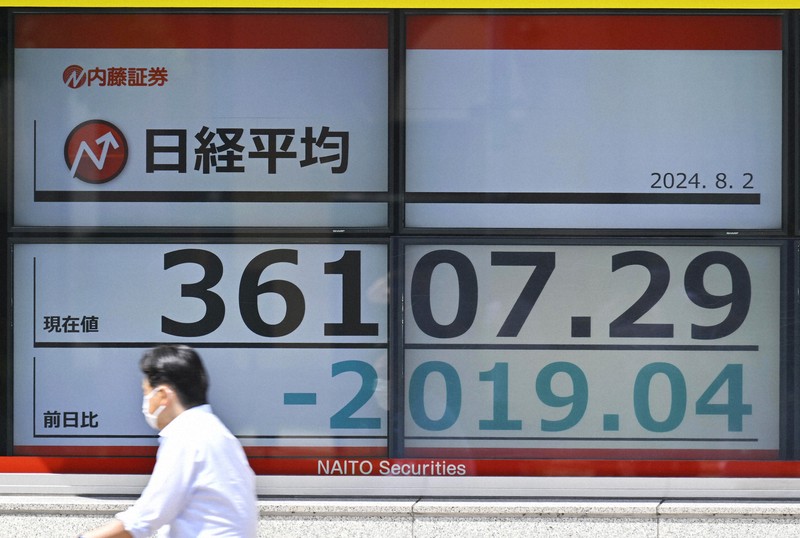
Tokyo's primary stock market, the Nikkei, experienced a precipitous fall, dropping more than 2000 points in intraday trading. This dramatic decline reflects underlying worries over Japan's economic health and its ability to withstand current global economic stresses. The exact triggers for this sell-off and potential implications remain uncertain, prompting concerns among domestic and international investors.
In Japan, the Nikkei Index is a major economic indicator and shapes public sentiment about the economy. Therefore, a sharp drop like this could dampen consumer spirits, potentially impacting spending habits and further exacerbating economic difficulties. Japan's aging population, which predominantly invests in safe assets, may face significant stress due to such market volatility.
Similar to the Dow Jones in the US or the FTSE in the UK, a drop of this magnitude would trigger automatic trading halts, aiming to prevent panic selling and provide investors time to assess the situation. However, in stark contrast, European and American markets tend to recover more quickly, often due to quicker policy responses and a more agile financial system.