
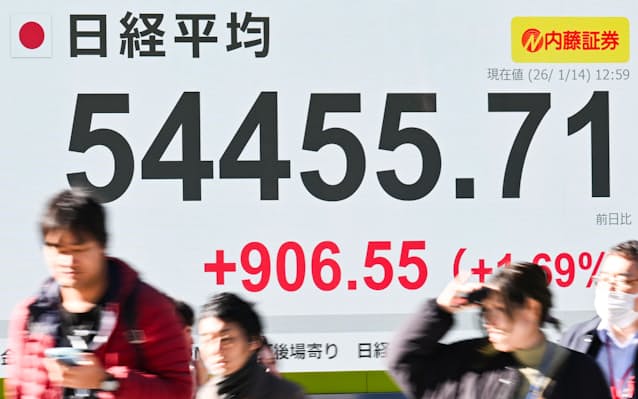
The Japanese stock market has seen a bold resurgence with the Nikkei Average bouncing back, closing at a robust 55,239 Yen. This is considered a milestone in an economy that has lately experienced some turbulent times, fueling a sense of guarded optimism among traders and investors alike. Experts attribute this positive change to various factors including strong domestic factors and international market trends.
In Japan, the stock market, particularly the Nikkei Average, is seen as an indicator of the country's economic health and potential future trends. This rise is thus seen as significant by many Japanese citizens, as it may hint towards economical stability and growth. Many people are sensitive to these fluctuations due to their investments, retirement schemes or job security being linked to this broader economic performance.
This situation could be compared to stock market trends in the US or EU, where significant changes in major indexes, like the Dow Jones or the CAC 40, generate major attention and are considered as indicators of national economic health. However, given the unique economic and geopolitical situation of Japan, the impacts and interpretations of such changes can differ.