
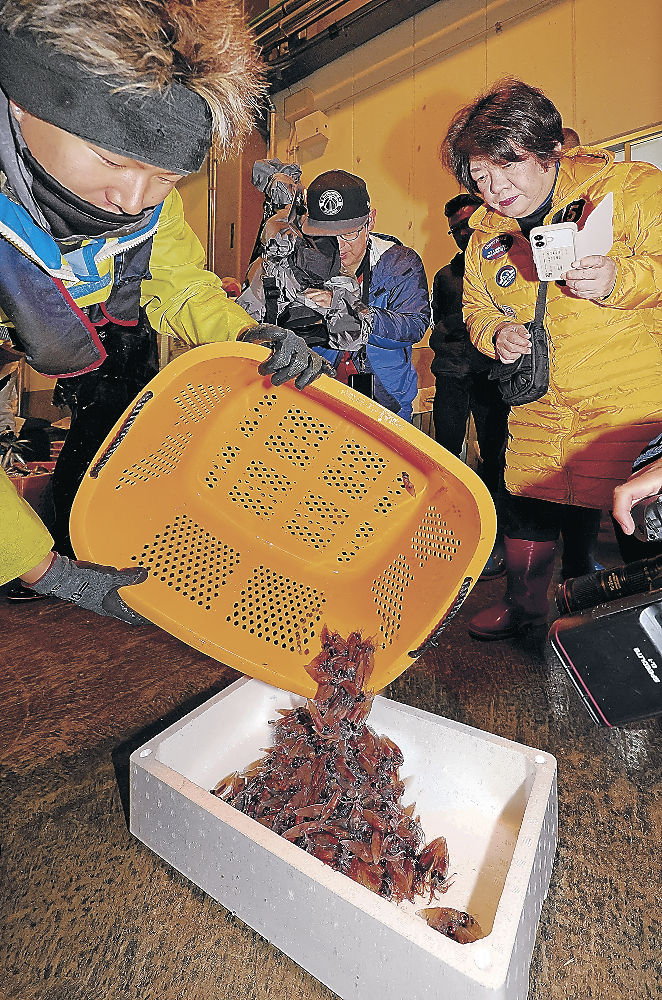
The firefly squid, a bioluminescent invertebrate frequently used in Japanese cuisine, has experienced a remarkable boom in the Toyama Bay. Once a dwindling population due to overfishing and environmental issues, strict fishery regulations and conservation efforts have reversed the trend. In a recent haul, fishers reported an unprecedented surge, from an average yield of one kilogram to a stunning 1300 kilograms.
The firefly squid holds considerable cultural importance in Japan both as a delicacy and a tourist attraction due to its seasonal displays of bioluminescence. The decline of the squid population had been a cause of concern for local fishers and conservation groups. The recent resurgence demonstrates the effectiveness of implemented conservation programs and sustainable fishing practices, which are hot topics in Japan due to the country's dependency on seafood.
In the US and EU, similar conservation efforts are focused on species like the Atlantic Bluefin Tuna and the European Eel. Sustainable fishing practices and regulations are recognized as critical to marine biodiversity. As is the case in Japan, there can be economic and cultural costs associated with these measures, but the ultimate goal is to strike a balance between consumption needs and ecological preservation.