
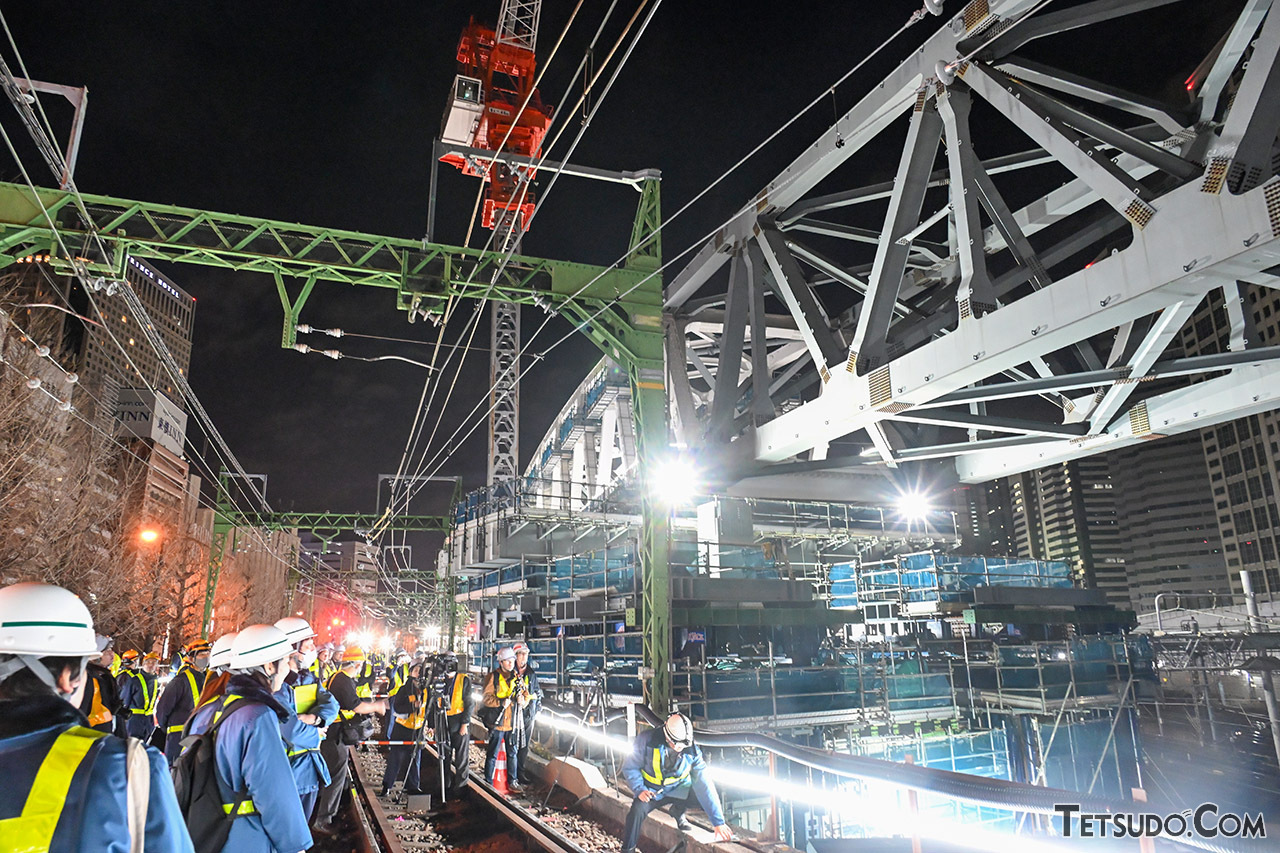
In an impressive display of engineering and urban development, a colossal bridge in Shinagawa, Tokyo, was relocated late at night. This move is a part of the broader initiative to elevate local railway lines above street level, which aims to improve transportation efficiency and reduce accidents. The exact date and time of the operation were undisclosed beforehand to evade unnecessary traffic congestion and public attention.
Japan frequently undertakes such infrastructure projects to improve urban mobility and safety. Its residents have high expectations for efficiency and minimal disruptions during these operations. The undisclosed timing reflects the country's respect for their citizen's convenience and their meticulous dedication to planning and executing civic projects, exemplifying Japan's unwavering commitment to urban development.
In the US or EU, large-scale infrastructure projects frequently involve public consultations and information disclosures in advance, with transparency being a legal and social essential. In contrast, Japan's practice of undisclosed timing demonstrates a unique balance of transparency and considerate management tied to societal expectations and norms.