
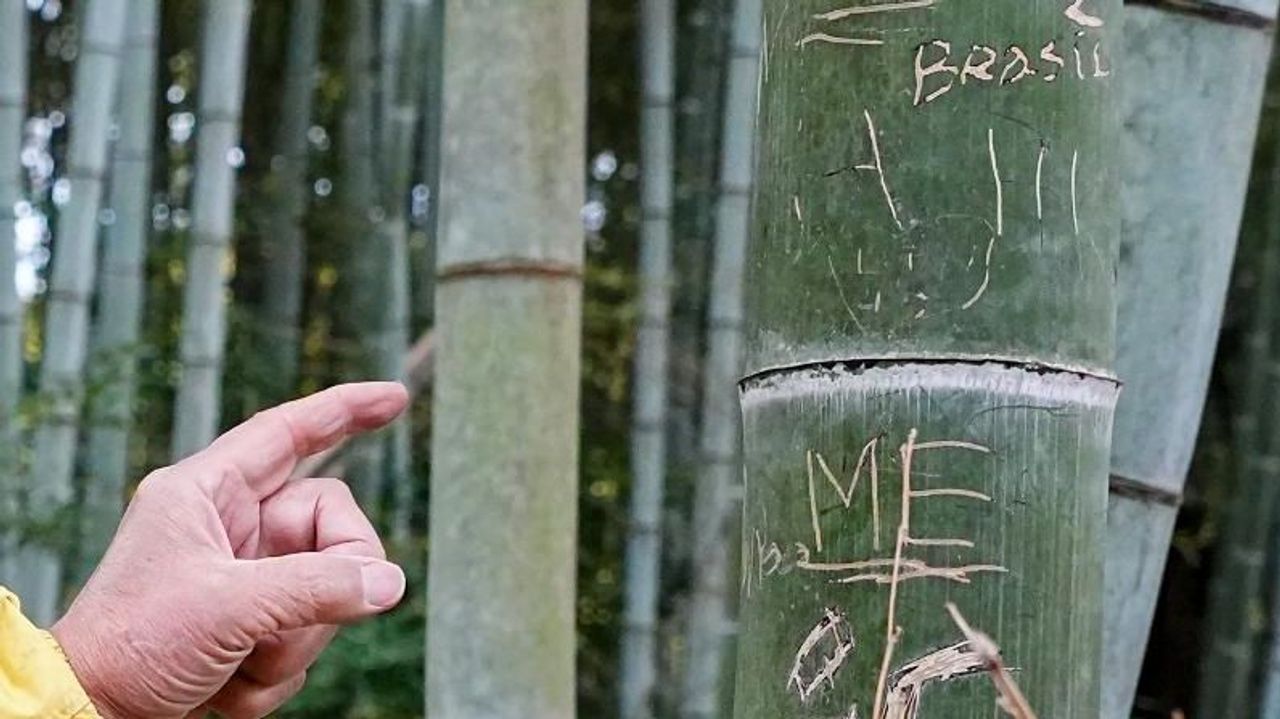
Graffiti in foreign languages has been popping up with increasing frequency in Kyoto, leading to somewhat mixed feelings from the property owners concerned. It's not clear who is behind these incidents, or why they are choosing to express themselves this way. But as the markings increase, it has triggered a fresh dialogue about respecting cultural landmarks and personal property.
In Japan, graffiti, especially on cultural landmarks and private properties, is viewed as disrespectful and a form of vandalism. Property is highly valued and the invasion of someone else's space in such a manner is seen as a violation of personal rights. Moreover, this kind of graffiti, particularly when it's in foreign languages, can be seen as a misuse of globalisation and an insensitive trespass on Japan's cultural heritage.
While graffiti can be viewed differently worldwide, in the US and EU, it is generally seen as vandalism especially when it appears on private properties or historical buildings. Like in Japan, such incidents can result in legal actions, though some parts of the US and EU have more accepting views on street art.