
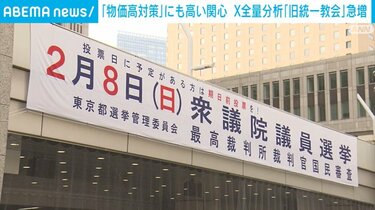
Following Japan's recent House of Representatives election, there's been a marked increase in persons identifying as former members of the 'Unification Church', a religious group often criticized as a cult. The reasons behind this sudden increase are currently being analyzed by pundits and scholars, with preliminary insights pointing to the church's political strategies and appeal among certain demographics.
The 'Unification Church', known in Japan as the 'Kyōdan Seinen' or 'Former Unification Church', has a controversial history and influences many societal discussions regarding freedom of religion and the potential for political exploitation. Japanese citizens carefully watch the church's activities due to concerns over its potential influence on the country's political landscape.
In the US or the EU, the intersection of religion and politics is also a contentious issue. However, there may not be as direct a correlation between religious affiliation and political alignment as is being seen in Japan with the 'Unification Church'. The extent of religious influence on politics varies greatly among Western democracies.