
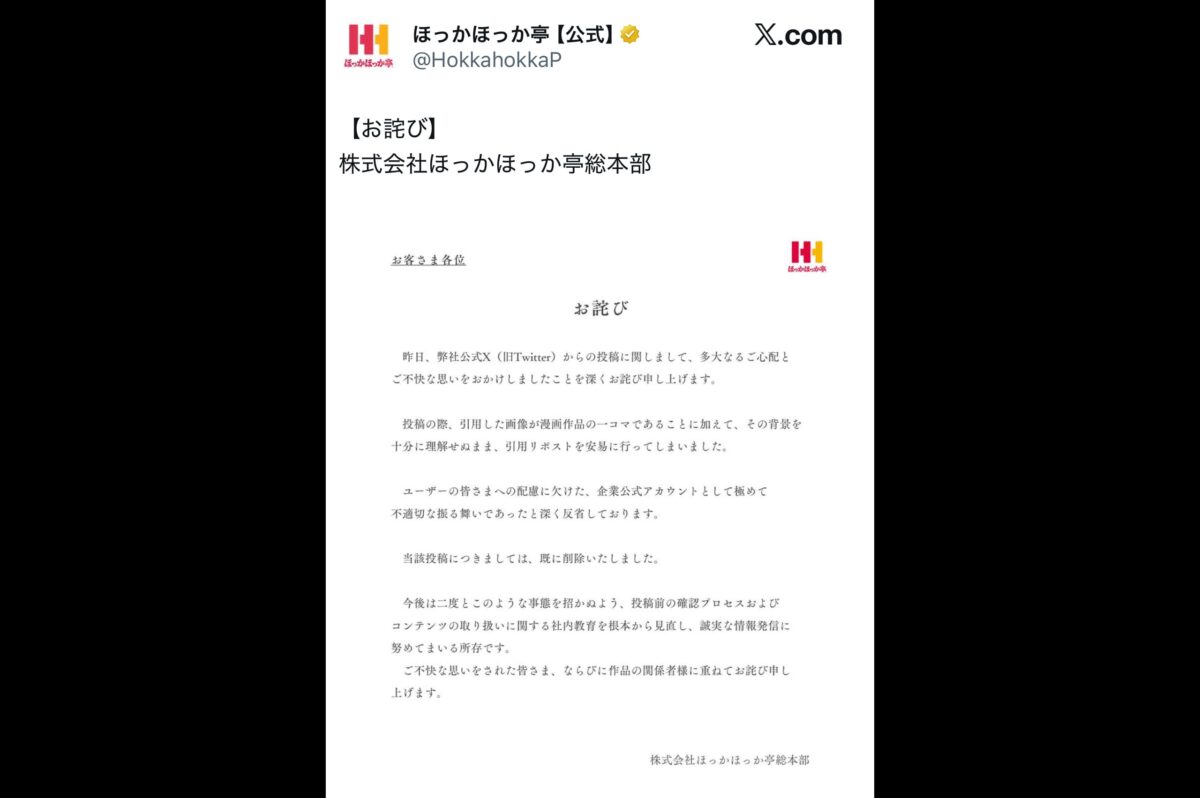
Hokkaido Tanko House, a well-known Japanese restaurant chain, has issued a public apology for reposting borrowed content without permission. The misstep occurred online, and when the oversight was discovered, the company promptly acknowledged its mistake and rectified the situation. This incident has sparked conversations about online content sharing etiquettes in Japan.
In Japan, respect for intellectual property rights is deeply ingrained in society. Japanese netizens typically underscore permission and credit in content sharing. Such activities, even a simple act of reposting without acknowledgment, can trigger public backlash. In the case of Hokkaido Tanko House, the indiscretion was quickly noticed and openly addressed, demonstrating their commitment to uphold these social standards.
Similar to Japan, the U.S and E.U take matters of intellectual property seriously. However, despite the presence of stringent laws, the act of reposting without credit is a more common occurrence in these countries. While individuals and companies do face repercussions, the public sentiment may not be as severe unless the offender is a high-profile entity.