
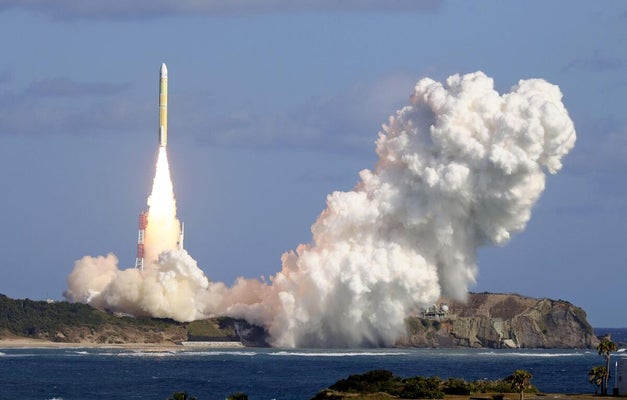
The launch of the much-hyped H3 rocket, a crucial project of the Japan Aerospace Exploration Agency (JAXA), ended in failure, delivering a significant blow to the country's space ambitions. Specific information about the cause of the failure remains undisclosed. The unsuccessful launch not only imposes a setback for Japan's technological advances but could also lead to a loss of credibility internationally. The future repercussions on Japan's space missions are currently under review.
Space exploration has been a source of national pride in Japan with many successful missions in the past. The H3 rocket launch was seen as a crucial milestone in cementing Japan's position as a significant player in the global space frontier. Hence, a failure of this magnitude has led to widespread disappointment and concern among the public and experts. The incident is seen as a setback to Japan's technological prowess and may compel the government and JAXA to review their strategies and operations.
In the US and EU, space exploration has also seen its fair share of failures. However, these regions have a more diversified space industry with several different players in the sector. Such failures are often seen as a setback, yet also as an opportunity to learn and upgrade their technology. The competition among different entities also helps in faster recovery and continued progress.