
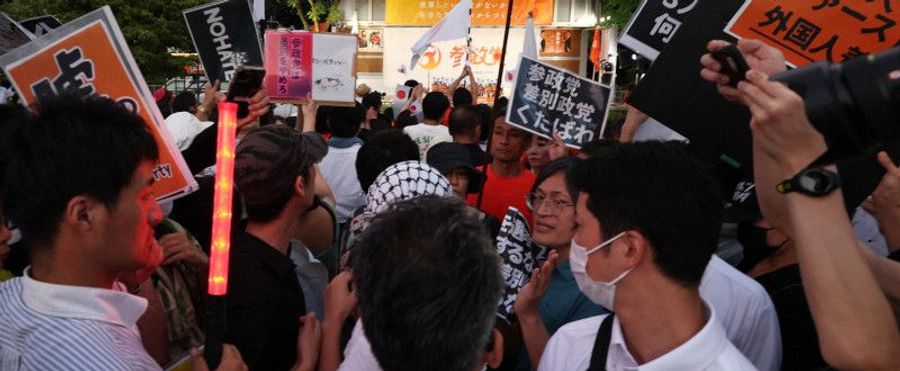
Japan is inching closer to passing a law that would punish those who damage or desecrate the national flag. This proposal has sparked a divisive debate within the society, stressing the fine balance between nationalistic ethos and individual liberties. While staunch supporters argue that it safeguards the symbolic dignity of the nation, critics fear it may infringe upon freedom of speech.
The Japanese national flag, also known as the "Hinomaru", holds deep symbolic relevance to the nation's identity. Hence, any desecration can be seen as disrespecting national unity. However, in the ultra-modern, democratic society of Japan, people hold various views concerning patriotism and freedom of speech, leading to controversial discussions around such laws.
Similar laws exist in both the US and EU with varying degrees of severity, all aiming to protect national symbols. In the US, attempts to forbid flag desecration have been challenged as breaches of the First Amendment right to free speech, although state laws vary. On the other hand, some EU nations such as Germany do make it a punishable offence to desecrate or publicly insult their flag or other symbols of state.