
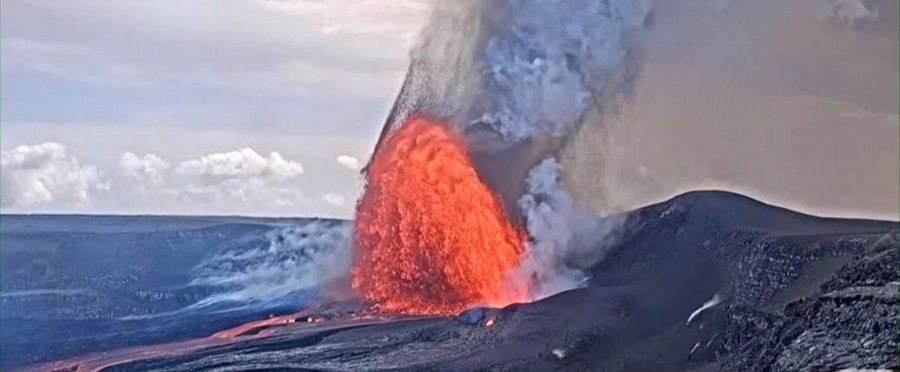
Hawaii's Kilauea Volcano has entered a new eruptive phase, exhibiting unusual activity with three separate eruption sites. Although there have been no immediate reports of damage or injuries, local authorities are on high alert. The Japanese public, with its keen interest in geological events, is closely monitoring the developments as Japan is a geologically active nation itself.
Japan has a long history of dealing with volcanic activity due to its positioning on the Pacific Ring of Fire. Any major global geologic event, such as this eruption, draws significant attention as it brings about discussions surrounding the preparedness, safety measures, and evacuation protocols in case of such an occurrence in Japan. It's also an interest topic for the scientific community in Japan as they gather data and learn from similar events around the world.
In the US, especially in Hawaii, volcanic eruptions are treated as natural hazard events. Both US and Japanese societies have robust infrastructure and protocols in place to manage such situations minimizing potential damages. In the EU, volcanic activity is primarily focused around Italy and Iceland, countries with structures in place to handle such events, similar to those seen in Japan and the US.