
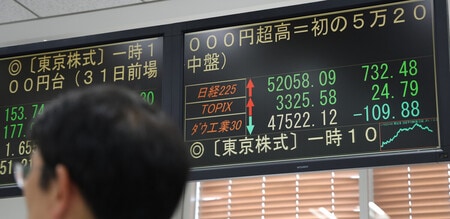
The Nikkei Average, representing the Tokyo stock market, momentarily surged beyond 1,000 yen, indicating a significant leap in the economy. This robust performance is attributed to a series of positive signals in the local and international economy, boosting investor confidence. The market's momentum, however, has seasoned analysts on edge, as they debate whether this surge is a temporary manifestation or an enduring upswing.
The Nikkei Average is a widely followed financial barometer in Japan, akin to Wall Street's Dow Jones in the U.S. This surge impacts not just big corporations and investors, but also affects citizens' pensions and savings, as many are linked to the market's performance. Hence, such news is closely monitored by the Japanese public.
Similar to the U.S. and the E.U., Japan's Nikkei is the pulse of its economy. When the Dow Jones or FTSE 100 rises, it creates a similar impact in the U.S. and the E.U., with individual and institutional investors, corporations, and governments keeping a close watch on these index fluctuations.